Yes, most Bluetti power stations can power devices while they are charging. This is commonly called pass-through power. Whether yours does it well depends on the model, so check your manual or the official product page. Heavy loads and fast charging at the same time can affect how much power you get and how warm the unit runs.
How pass-through works in practice
When you plug in a wall outlet, solar panels or another source, the unit sends power to the battery and to whatever is plugged into its outputs. Incoming power generally supports the load first, and any surplus goes to the battery. If your load is bigger than the incoming power, the battery makes up the difference and keeps draining, just more slowly.
Where it helps
- Short outages: keep a router, lights or a fridge running while a generator or solar refills the battery.
- Solar days: panels can run your devices directly while topping up the battery. See the solar generator guide for input limits.
- Work sites or campsites: tools and electronics stay on while the unit recharges.
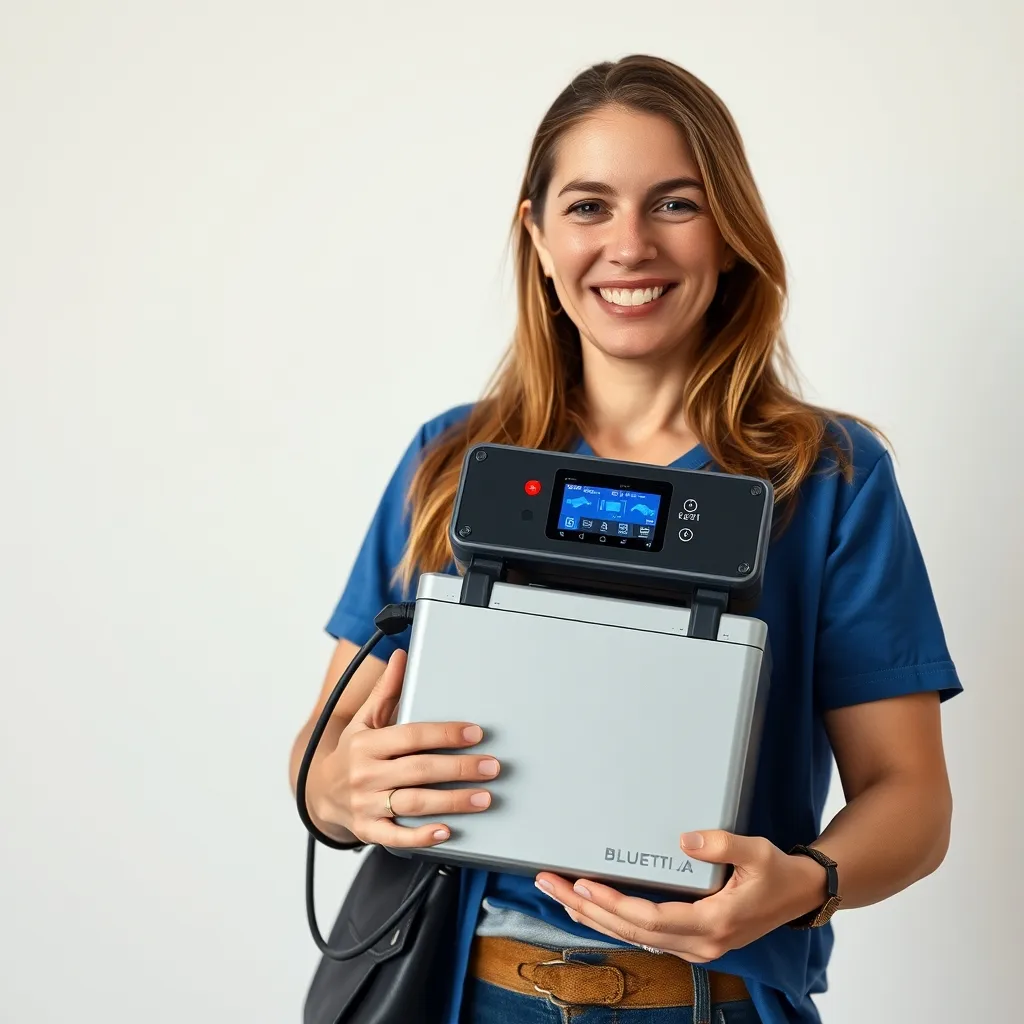 Recommended for youLiFePO4 Batteries in Bluetti Power Stations: What the Chemistry Means in Practice, Plus the Trade-Offs
Limits and trade-offs
- Charging slows down when your load is high, because the load takes a share of the input.
- Heat and fan noise can increase when charging and discharging together.
- It is not a guaranteed UPS. Some models may switch over quickly, but don't rely on it for sensitive equipment such as medical devices unless the manufacturer states it is suitable. For anything safety-critical, consult a qualified professional.
- Output limits still apply. Check the rated AC watts and surge figures in the capacity and output explainer, and see whether appliances need 120V or 240V.
- Battery wear: constant cycling at a high state of charge isn't ideal for any battery. Read whether you can leave a Bluetti plugged in and the LiFePO4 overview.
Practical tips
- Add up your load watts and keep them well under the unit's rated output.
- Use a charging source large enough to cover the load plus some surplus. Options are covered in how to charge a Bluetti.
- Give the unit airflow and keep it out of direct sun.
- Confirm current pass-through behavior, and any modes that change it, on the official Bluetti site.
Related
Comparing models? Start with what's inside a Bluetti, then look at Power Lifting mode, expansion batteries and daily use and storage tips.
Keep reading
 Bluetti Capacity, AC Output and Surge Watts Explained: What 2,764.8Wh and 3,840W Can Actually RunTwo numbers on a power station's spec sheet cause most of the confusion: capacity in watt-hours (Wh…
 Bluetti 120V vs 240V Output: Which Appliances Need Split-Phase Power and Who Needs ItMost things in a home run on 120V. A few of the biggest loads need 240V, and that is where a power…
 Bluetti Expansion Batteries Compared: B300K vs B500K and Which to AddThe short answer Choose the expansion battery by what your host power station supports and how many…